




If you live in Brooklyn, your car isn’t just a vehicle, it’s a survival pod. Between dodging delivery scooters on Bedford Avenue, white-knuckling it over the Verrazzano, and praying your suspension survives the craters on the BQE, your tires go through a lot.
But here is the thing: most people walk into a tire shop in Brooklyn and ask for “all-season” tires because the name implies they’re good for, well, all seasons. It sounds like a no-brainer, right? Unfortunately, in the world of automotive marketing, “all-season” is a bit of a misnomer when it comes to New York winters.
At 770 Auto Service, we believe in being honest with our neighbors. We’ve seen too many cars slide into curbs during a February slush-storm because they had the wrong rubber on the road. Today, we’re breaking down the real difference between All-Season and All-Weather tires, and why one of them is almost certainly the better choice for your Brooklyn commute.
The 45-Degree Rule: Why Your Rubber Matters
Before we get into the tread patterns and fancy names, we need to talk about chemistry. Tires aren’t just “round and black.” They are made of complex rubber compounds designed to perform at specific temperatures.
Think of it like a stick of butter. When it’s warm out, butter is soft and spreadable. When you put it in the fridge, it gets rock hard. Tire rubber is the same.
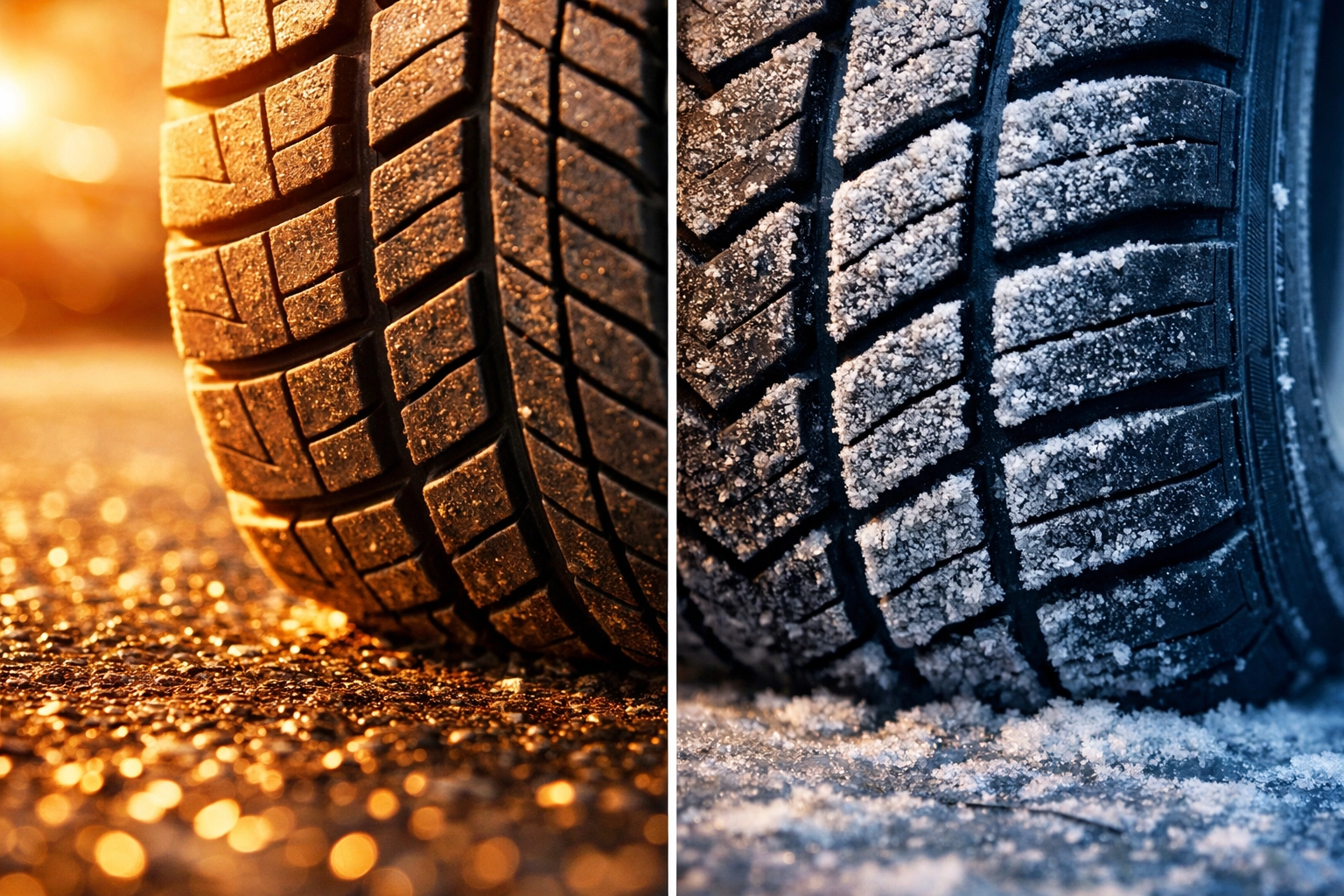
All-Season tires are designed to stay flexible in a wide range of temperatures, but they have a breaking point: 45 degrees Fahrenheit. Once the temperature in Brooklyn drops below 45 degrees: which happens for about five months of the year: the rubber in all-season tires begins to harden. When rubber gets hard, it loses its “grip.” It can’t bite into the pavement, and your stopping distance gets longer.
All-Weather tires, on the other hand, use a specialized compound that stays soft and “grippy” even when the thermometer hits freezing. This is the secret sauce that keeps you from sliding when you’re trying to stop at a red light on a slick Atlantic Avenue.
What Exactly Are All-Season Tires?
Don’t get us wrong; all-season tires are great, but they should really be called “Three-Season Tires.” They are built to handle:
- Dry pavement in the summer.
- Heavy rain and hydroplaning resistance in the spring.
- Mild temperatures in the fall.
They are designed for long tread life and a quiet ride. If you lived in South Carolina, they would be perfect. But in Brooklyn? When we get that heavy, wet snow followed by a flash freeze, all-season tires act like hockey pucks. They lack the deep grooves and “sipes” (tiny slits in the tread) needed to move snow out of the way and grab onto ice.
If you’re sticking with all-seasons, you really should consider a dedicated set of winter tires for the months of December through March. But let’s be real: who has space in a Brooklyn apartment to store four extra tires?
Enter the All-Weather Tire: The Brooklyn Middle Ground
This is where the All-Weather tire comes in. Think of it as the hybrid athlete of the tire world. It’s a relatively new category that combines the best parts of a summer tire and a winter tire.
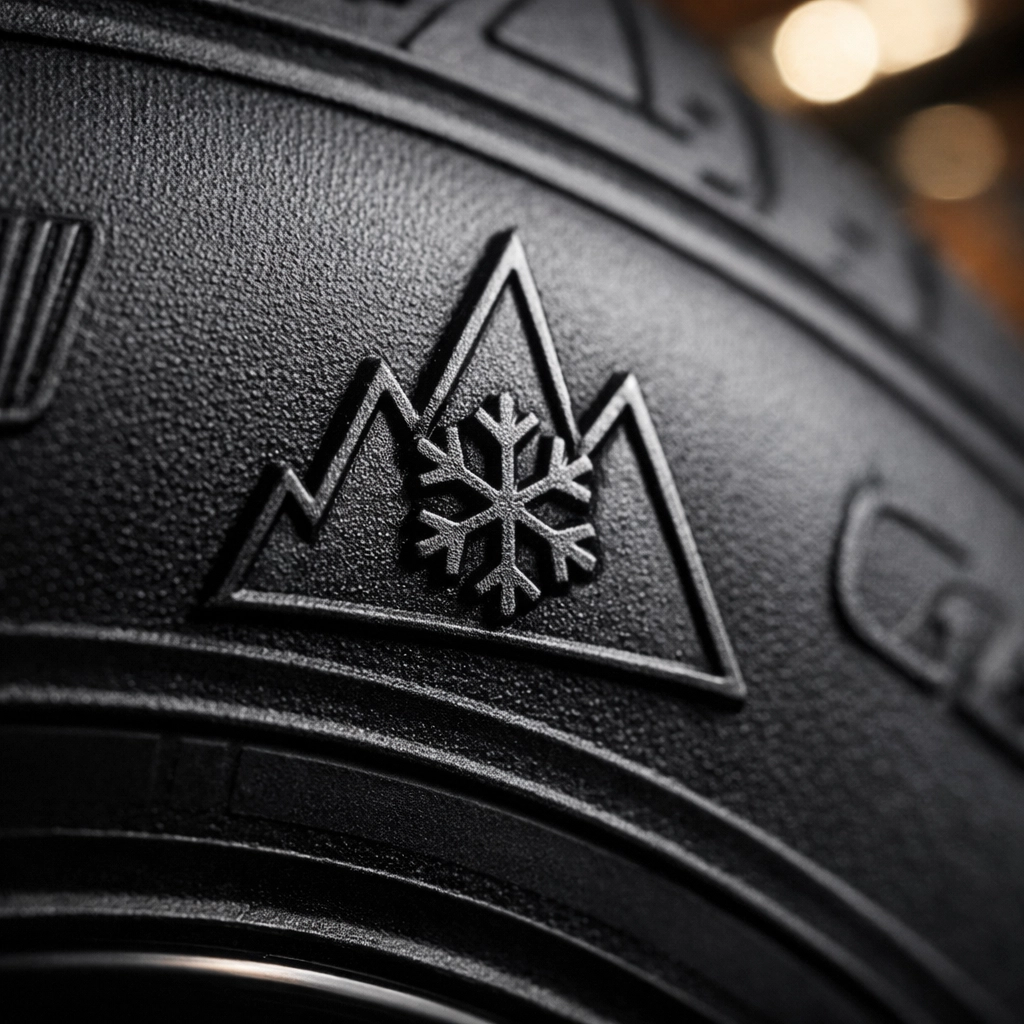
The biggest visual difference? Look for the Three-Peak Mountain Snowflake (3PMSF) symbol on the sidewall.

Unlike All-Season tires, which usually just have an “M+S” (Mud and Snow) rating, All-Weather tires are officially certified for “severe snow service.” This means they’ve been tested to ensure they can actually stop and turn on packed snow.
For a Brooklyn driver, this is a game-changer. You get the convenience of one set of tires all year round, but you get the safety of a winter tire when a Nor’easter decides to bury your street in six inches of white stuff.
Comparing the Two: Side-by-Side
If you’re weighing your options at your favorite mechanic in Brooklyn, here’s the quick breakdown:
| Feature | All-Season Tires | All-Weather Tires |
|---|---|---|
| Best Temperature | Above 45°F | All Temperatures |
| Snow Performance | Light dusting only | Heavy snow & slush |
| Ice Grip | Poor | Good |
| Tread Life | Longer (60k+ miles) | Slightly shorter (40k-50k miles) |
| Road Noise | Very Quiet | Quiet to Moderate |
| Certification | M+S (Mud & Snow) | 3-Peak Mountain Snowflake |
Why Brooklyn Drivers Specifically Need All-Weather
Driving in the city isn’t like driving in the suburbs. We have unique challenges that make tire choice even more critical.
1. The Stop-and-Go Factor
Brooklyn driving is constant braking. Whether it’s a pedestrian stepping out between parked cars or a yellow cab cutting you off, you need immediate bite. In cold weather, All-Weather tires provide significantly shorter stopping distances than All-Seasons. That extra 10 feet could be the difference between a close call and a trip to our auto body repair services.
2. The Pothole Nightmare
Let’s talk about those craters. A cold, hardened All-Season tire doesn’t absorb impact well. When you hit a pothole with a “frozen” tire, the energy is transferred directly to your rim and your suspension. A softer All-Weather compound has a bit more “give,” which can sometimes be the grace note that saves you from a suspension repair.
3. The “Unplowed Street” Reality
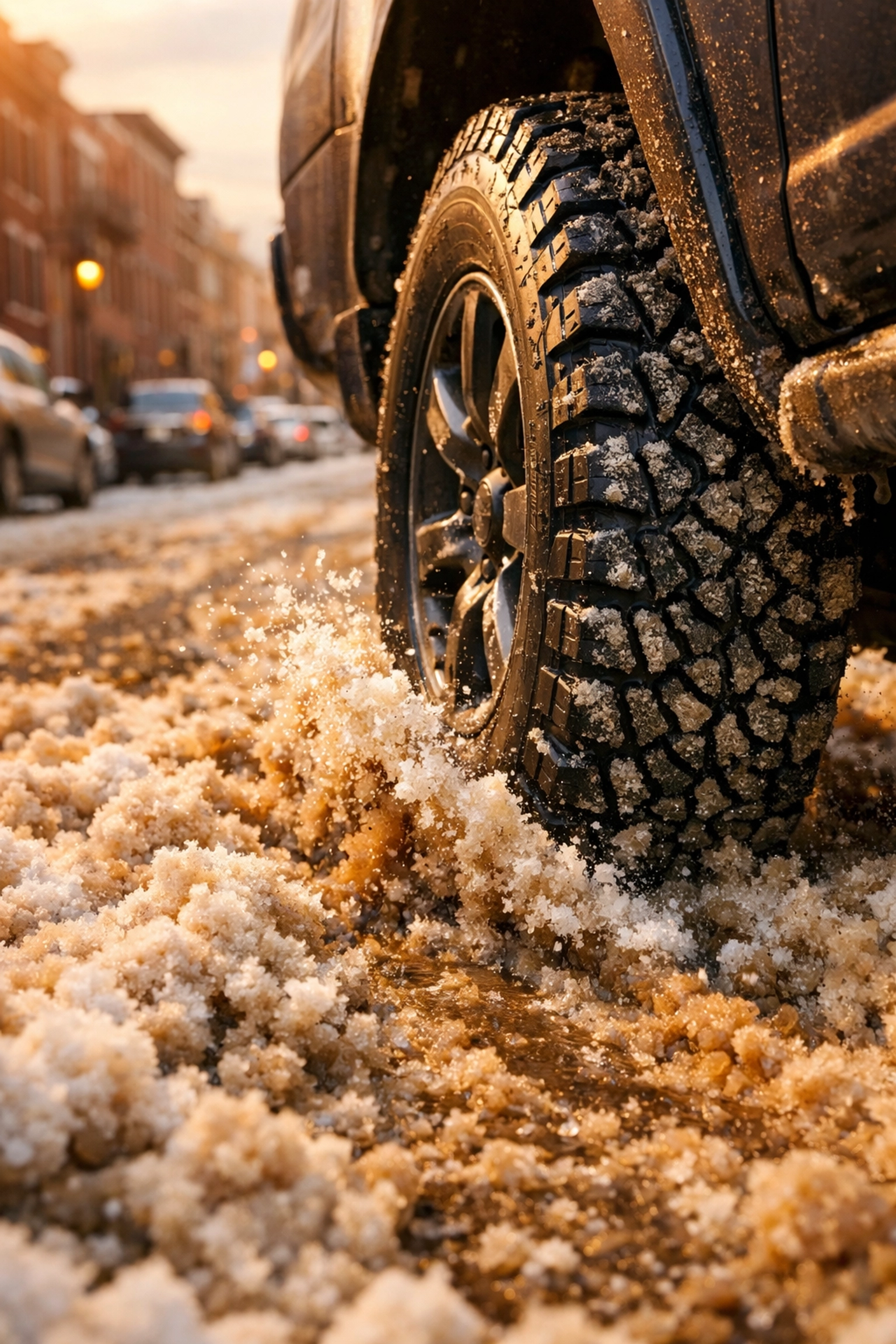
If you live on a side street in Bushwick or South Brooklyn, you know that the plows don’t always get to you right away. All-Season tires will leave you spinning your wheels and digging for a shovel. All-Weather tires have aggressive tread blocks that “chunk” through the slush, helping you get out of your parking spot without a cardiovascular workout.
Is There a Catch?
We promised to be an honest auto repair shop in Brooklyn, so here’s the trade-off: All-Weather tires usually wear out a little faster than All-Seasons. Because the rubber is softer, it can wear down more quickly during those scorching July days on the Belt Parkway.
However, we always ask our customers: what’s more expensive? Replacing your tires 10,000 miles sooner, or paying an insurance deductible because you couldn’t stop on an icy patch of the BQE? For most of us, the safety “peace of mind” is worth the slightly shorter lifespan.
Don’t Forget the Maintenance
No matter which tire you choose, Brooklyn will try to ruin them. Between the salt, the curbs, and the temperature swings, your tires need love.
- Check Your Pressure: Air density changes with the weather. When it gets cold, your “low tire pressure” light will probably pop up. Don’t ignore it!
- Rotation is Key: Because of all the turning and braking in city traffic, your front tires wear much faster. We recommend a rotation every 5,000 to 7,000 miles to keep things even. Check out our general car maintenance guide for more tips.
- Alignment Matters: If your car is pulling to one side after hitting a nasty pothole, your alignment is off. This will chew through even the most expensive All-Weather tires in a matter of months.
How 770 Auto Service Can Help
Choosing tires can be overwhelming. You’ll see dozens of brands and prices ranging from “budget” to “I could have bought a used car for this.”
As your local tire shop in Brooklyn, we’re here to simplify things. We’ll look at your car, listen to your driving habits (do you mostly stay in the borough, or are you driving up to Vermont every weekend?), and give you a straight answer on what fits your budget and your safety needs.
If you aren’t sure what state your current tires are in, bring them by for a car service checklist visit. We’ll check your tread depth, look for dry rot, and make sure your spare isn’t flat.
Final Verdict: Which One Should You Buy?
- Buy All-Season Tires if: You have a place to store winter tires and don’t mind swapping them twice a year, or if you rarely drive when the temperature drops below 40 degrees.
- Buy All-Weather Tires if: You want one set of tires that can safely handle Brooklyn’s unpredictable winters, you don’t want the hassle of tire storage, and you prioritize stopping power in the cold.
Ready to get your car winter-ready or just need a check-up before your next road trip? Whether it’s a tire swap, a check engine light diagnostic, or just a quick NYS inspection, we’ve got your back.
Don’t wait for the first snow of the season to realize your tires aren’t up to the task. Contact us today or swing by 770 Auto Service. We’ll get you rolling safely, honestly, and without the jargon.